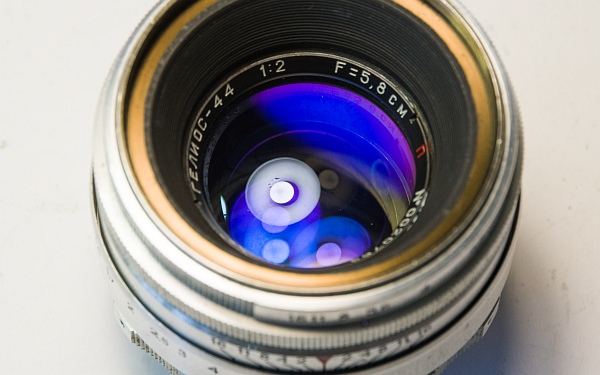
1. Remove the lens block
The lens block can be easily unscrewed by turning it counterclockwise. If it is very tight, rubber gloves may help.
One or more (sometimes very thin) shims become visible. They ensure that the lens is properly focused to infinity.
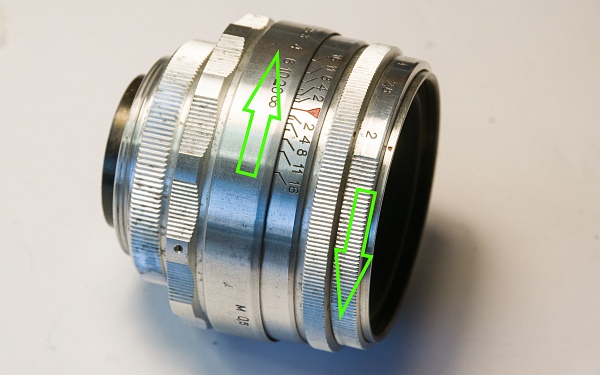
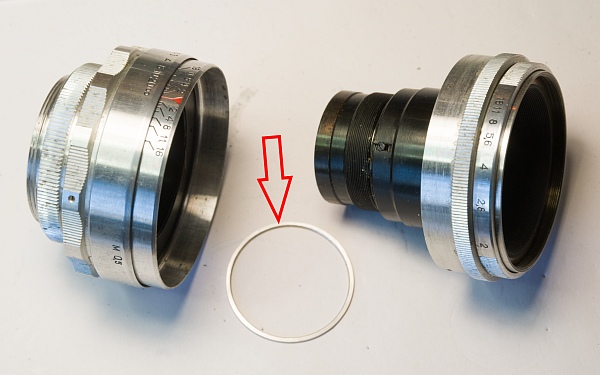
2. Remove the aperture and exposure scale
Set the lens to infinity and mark the position on the inside with a small scratch.
Next, remove the three grub screws that hold the meter scale in place. You can then pull it straight up to remove it.
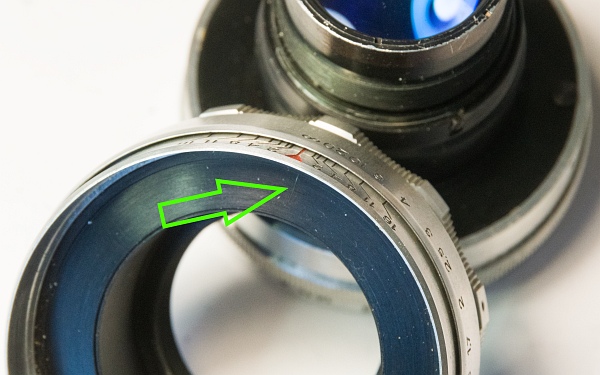
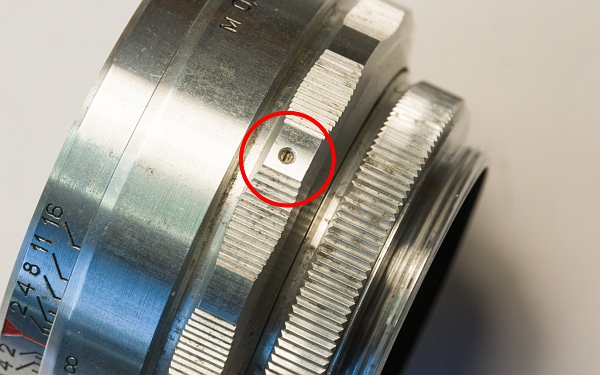
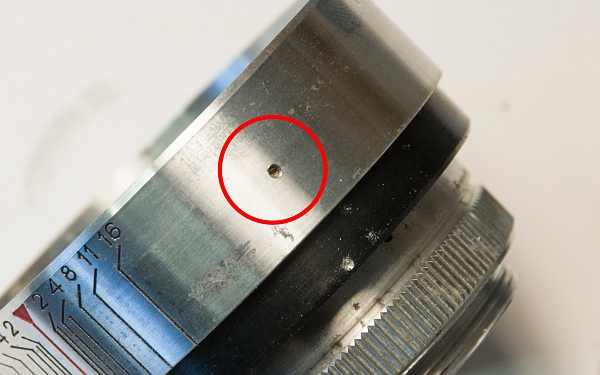
Next, we remove the ring with the aperture scale. There are three set screws here as well. Then the ring can be removed (left).
3. Remove the focus ring
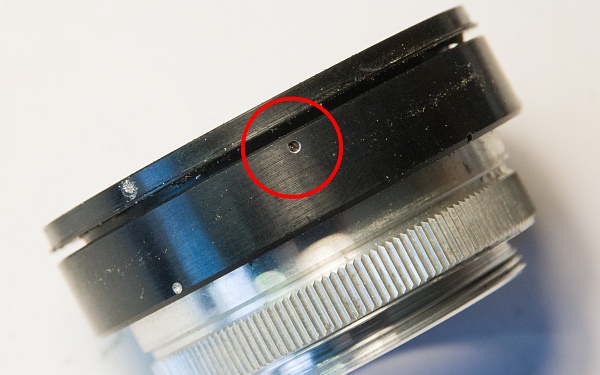
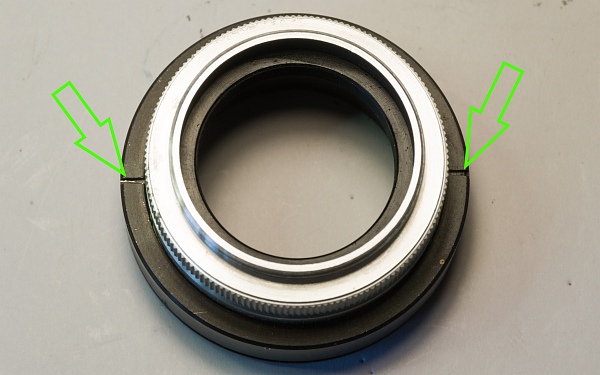
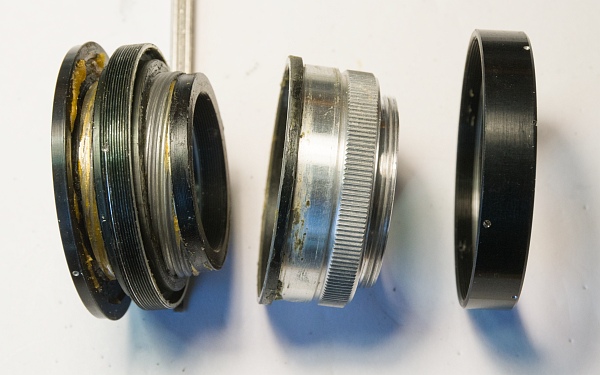
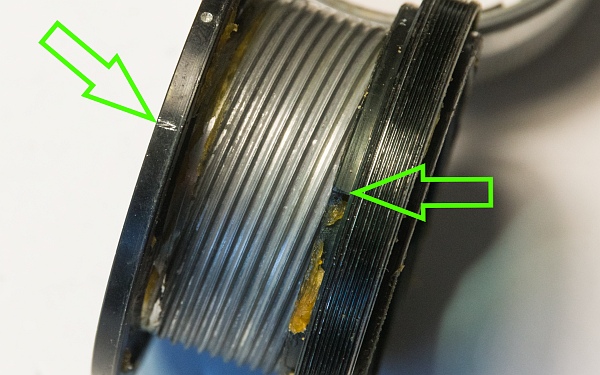
Three more grub screws hold the focus ring cover in place. It must then be unscrewed using a wrench. The part can be quite tight (left, green arrows).
On the left is the exposed focus worm gear with the focus ring; in the center is the M42 threaded connection; and on the right is the cover that has just been unscrewed (bottom).
As you can see, the original lubricant has turned into a tar-like mass, as the solvents have evaporated over the decades.
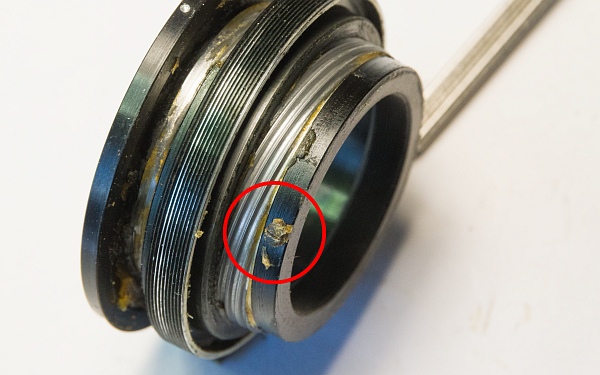
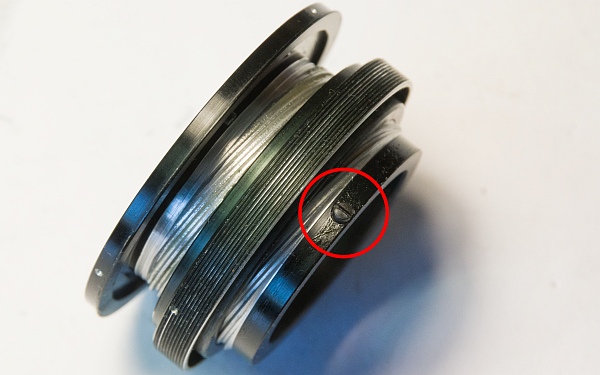
The locking screw, which is buried under old grease, must be removed so that we can unscrew the focus ring.
Carefully turn the focus ring until it comes out of the focus gear. It is essential to mark this position! The lens will only focus correctly if you turn it back into this exact position.
4. Clean
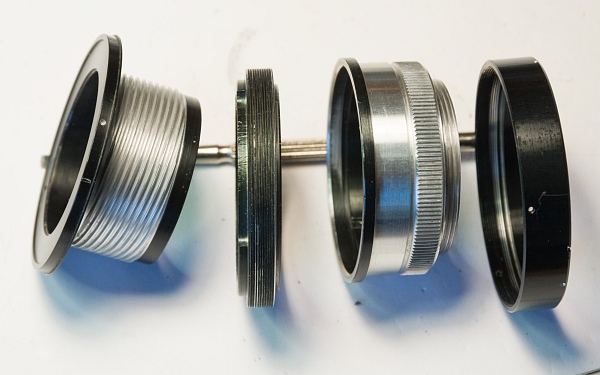
All the parts have been cleaned of the old grease, so now we can put everything back together.
The old grease can be easily removed with a toothbrush and mineral spirits.
5. Re-lubricate
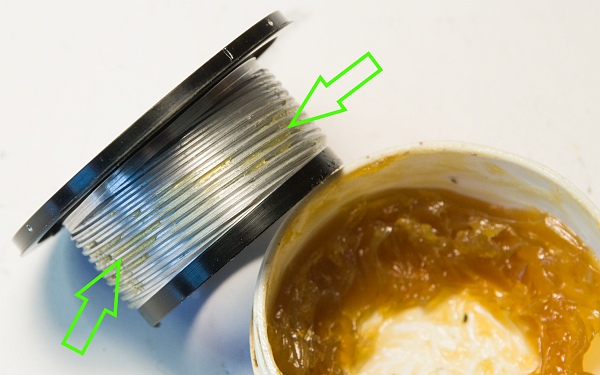
Grease the focus screw lightly. You’ll need significantly less grease than you removed earlier.
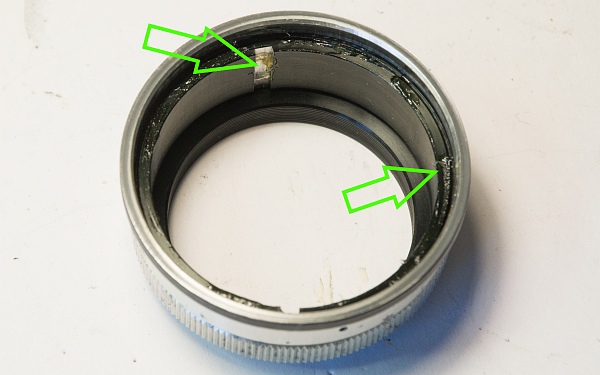
The slot that slides over the locking screw, as well as the upper inner edge of the screw connection, also need a little grease.
6. Reassembly
The focus ring must be screwed back into the focus gear at the previously marked spot. Turn the ring back and forth to distribute the grease evenly. The focus ring should now move smoothly and evenly.
Then reinsert the locking screw.
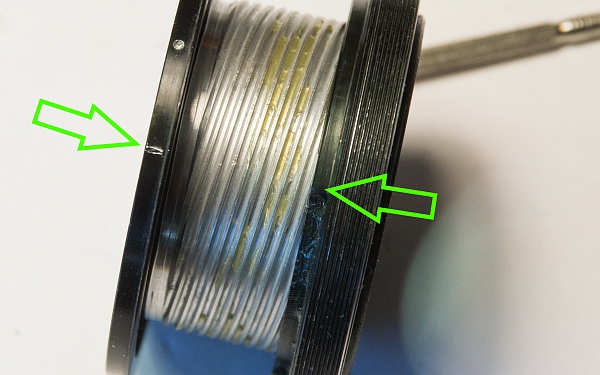
Reattach the M42 screw mount and screw the focus gear cover back on. Then reattach the aperture scale.
Next, reattach the meter scale and screw the lens block back in (don’t forget the shims!).
7. The result
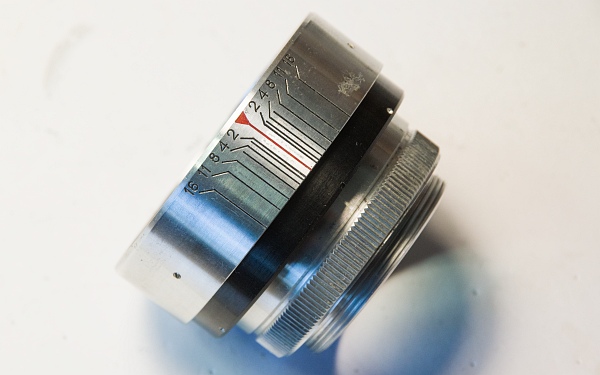
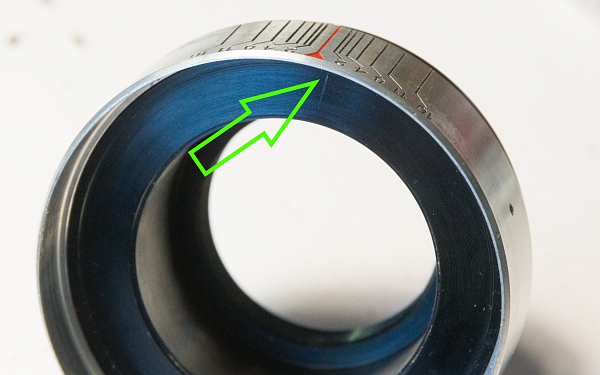
Once the lenses have been cleaned, the results are quite impressive. The blue-violet coating is typical of the first Helios 44 lenses.